How it works, ADS-B?
Flightradar24 combines the ADS-B datas (Automatic Dependent Surveillance-Broadcast) provided by thousands of receivers distributed around the globe. These receptors are implemented by people and participate in the functioning of this international system. Besides Flightradar24 provides reception systems to those who apply and are eligible due to their geographical position in a poorly covered area.
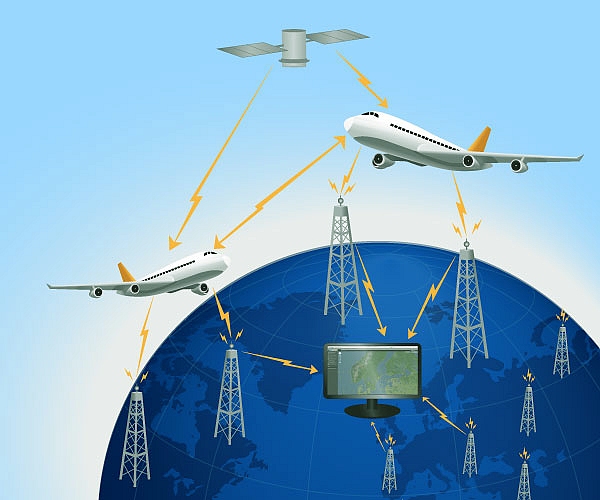
Principle of ADS-B - Source © Flightradar24
- The plane gets its location from a GPS receiver
- The ADS-B transponder installed on the aircraft transmits a signal at 1090 MHz containing the position information and other data (Flight Number and callsign, altitude, speed, rate of climb ...)
- ADS-B signal is received by a receiver on the ground, connected to the servers of Flightradar24
- The receiver sends the received data to Flightradar24
- The data are displayed on www.flightradar24.com and Flightradar24 apps.
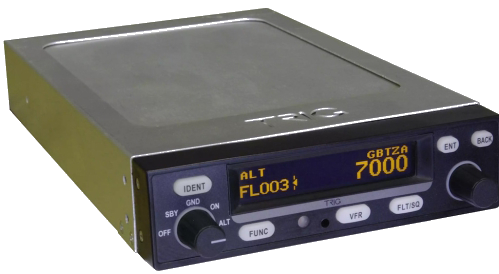
ADS-B Transponder
ADS-B is a relatively new technology and still under development which means that currently it is rarely used for air traffic control. Flightradar24 estimated that around 65% of commercial aircraft carrying passengers (75% in Europe, 35% in the US) are equipped with an ADS-B transponder. For general aviation that number is probably less than 20%. But this percentage is increasing and ADS-B will become mandatory for most aircraft in 2020. ADS-B will replace the primary radar as aerial surveillance method used by ATC.
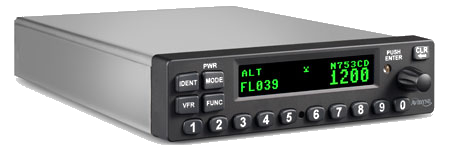
ADS-B Transponder
When a plane flies away from the receiver, it must fly high to be in the area covered by the receiver. The maximum range makes it very difficult to get an ADS-B coverage over the oceans.
About 99% of Europe is covered with ADS-B receivers. There is also a good ADS-B coverage in the US, Canada, Mexico, Caribbean, Brazil, Russia, Middle East, India, Japan, Thailand, Malaysia, Indonesia, Australia and New Zealand. In other parts of the world, the ADS-B coverage is very variable.
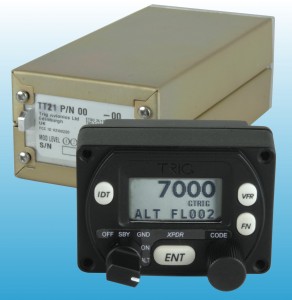
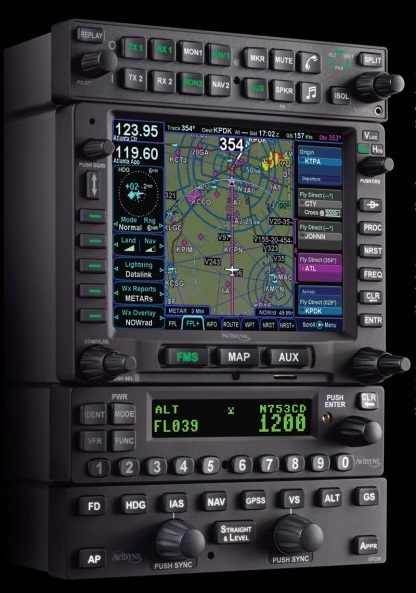
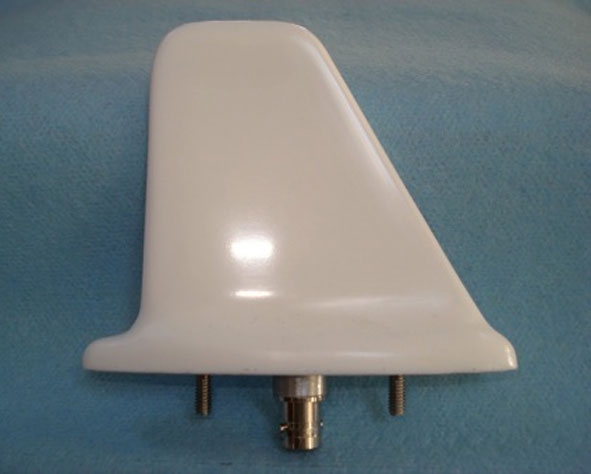
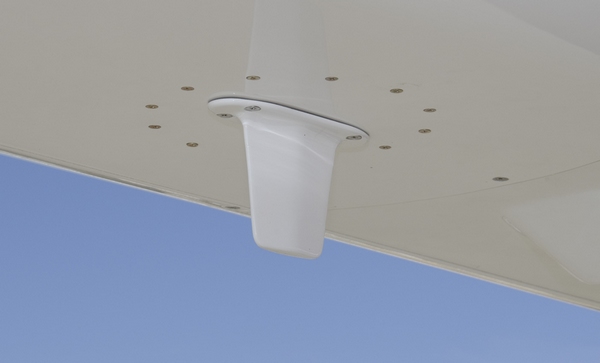
The transponders and antennas on aircraft
There are many models for aircraft transponders, such as those shown earlier in the article.
Receivers
FR24
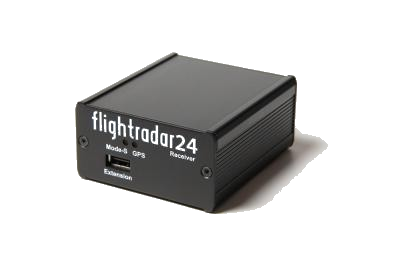
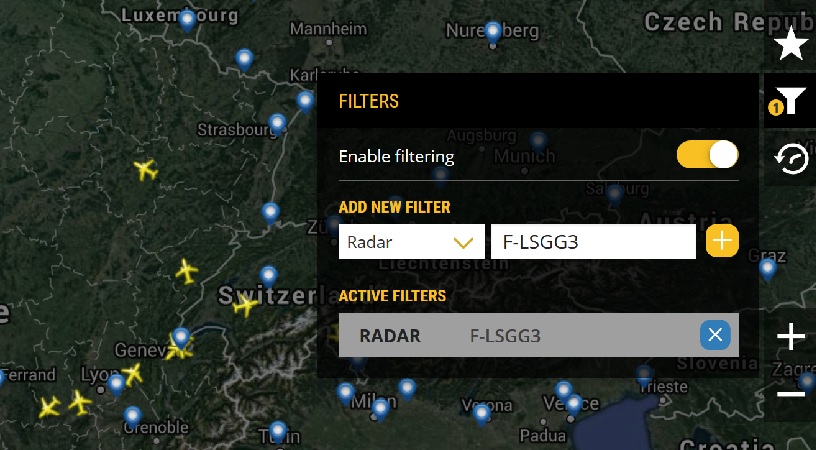
My station uses this receiver. My radar callsign is "F-LSGG3"
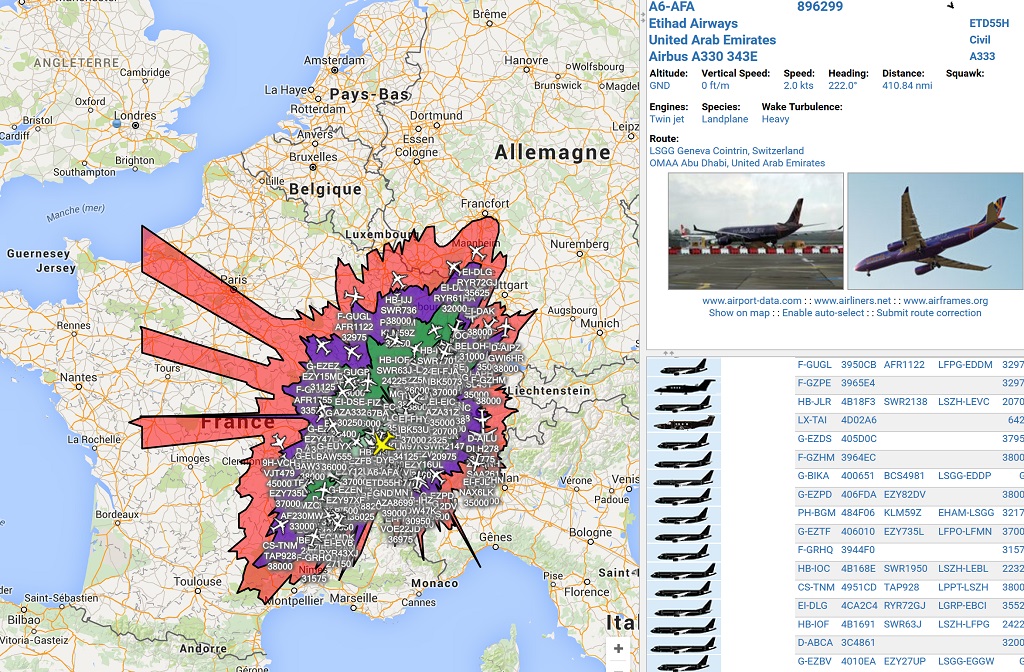
Characteristics:
- Received formats : 1090 MHz Mode S, ADS-B and Mode-AC
- Reception range: more than 225 Km (depending on the quality of the antenna and its location)
- Processing speed: over 1600 frames per second S-Mode (in areas with heavy traffic)
- Timestamp mode or 12 MHz high resolution GPS mode
- IP automatically assigned by DHCP
- Works behind NAT
- Power consumption: less than 5W
- Bandwidth Consumption: 200 to 800 MB / month depending on the coverage
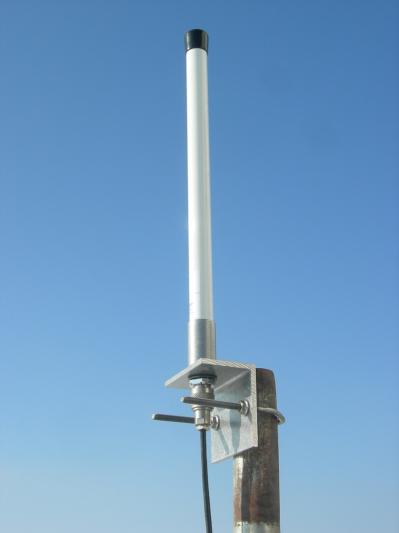
The antenna supplied by Flightradar24
Contents of the receiveing kit provided by Flightradar24
- The GPS antenna with 5m cable
- Continuous power supply (110V-230V ~ input)
- 5 m Ethernet cable
- A Mode S antenna, 38 cm long with mounting system (0 dBd, 55 cm long, waterproof)
- A coaxial cable 5 or 10 meters long for the Mode-S antenna with connector.
- Cable type H 155 6mm diameter low loss. Cable equipped with SMA male connector and N-type connector
The Flightradar24 stick
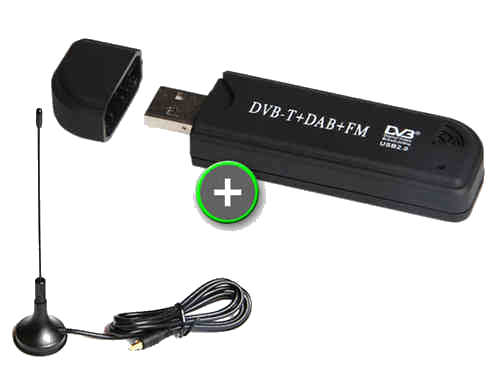
See illustration below.